Tools
Best Rail Nippers and Track Cutters
Quick answer
The best cutter for trimming flex track and rail joints is the Xuron Vertical Track Cutter 2175M at $21.25, because it is ground and hardened specifically for rail, and kept for that job alone it stays sharp for years instead of the months a shared cutter lasts.
A rail cutter and a wire cutter look almost identical and are not interchangeable if you want either to keep cutting cleanly. The Xuron Vertical Track Cutter 2175M is shaped and hardened to shear nickel silver rail flush and square; using it on steel wire, brass wire or plastic sprues dulls that edge fast, and a dull rail cutter crushes the rail end instead of cutting it.
This page covers the cutters worth owning for track work specifically. For a broader kit that also covers wire, kit assembly and general workbench tasks, see best model railroad tools.
On this page
- What makes a cutter good for rail specifically?
- Rail cutter, wire cutter or micro shear: which one do I actually need?
- Why does a rail-only cutter actually stay sharp longer?
- How do I know when a cutter has actually gone dull?
- Beginner: one general cutter for everything that is not rail
- Intermediate: add the dedicated rail cutter once you start laying track
- Expert: a third, smaller cutter for fine detail work
What makes a cutter good for rail specifically?
A flush, or "one-sided," cutter grinds one face of the blade completely flat so it leaves that side of the cut with no burr or angled taper. For rail, that flat face goes against the rail head so the cut end sits flush against whatever it butts up to next, whether that is another piece of rail or a rail joiner. A standard diagonal wire cutter leaves both faces angled, which produces a small pointed nub on both ends of the cut. On rail, that nub has to be filed away by hand before the joint looks or conducts electricity properly.
Xuron's 2175M is sold specifically as a track cutter for this reason; the general-purpose Xuron shears in the same product line are ground for a clean cut on wire and styrene but are not marketed or hardened the same way for rail.
Rail cutter, wire cutter or micro shear: which one do I actually need?
All three are flush cutters; they differ in size, jaw shape and what they are hardened to cut cleanly.
The vertical track cutter is the only one of the three built and hardened specifically for rail.
| Cutter | Best for | Jaw size | Price |
|---|---|---|---|
| Xuron Vertical Track Cutter 2175M | Rail only, flex and sectional track | Standard | $21.25 |
| Xuron Maxi-Shear Flush Cutter 2175 | Wire, sprues, styrene | Standard | $17.63 |
| Xuron 410 Micro-Shear Flush Cutters | Fine detail parts, thin gauge wire | Small | $16.04 |
Why does a rail-only cutter actually stay sharp longer?
Nickel silver, the alloy most model rail is made from, cuts cleanly with less edge wear than the steel-core wire, brass wire or piano wire common on a hobby workbench. A cutter that alternates between rail and wire dulls at whatever rate the harder material wears it down, then carries that duller edge into the next rail cut. Reserving one cutter for rail removes that variable entirely: it only ever meets the softer material, so the edge geometry that makes the cut flush lasts for years of regular track work instead of a single project's worth of mixed use.
The practical version of this rule is cheap to follow: label the two cutters, or buy them in different colors, and never let the rail cutter touch a spool of BNTECHGO 22 AWG Silicone Wire Red and Black 250 ft Stranded Tinned Copper feeder wire or anything else. It costs the price of a second $17 cutter and it is the single best-value tool decision on this list.
How do I know when a cutter has actually gone dull?
A dulling cutter does not announce itself the way a dull kitchen knife does; it degrades gradually enough that the change is easy to miss until a joint you cut looks obviously worse than the last one. The clearest sign on rail is the cut end starting to look pinched or slightly rolled over instead of perfectly flat and square, as if the metal was crushed rather than sheared. A second sign is needing noticeably more hand pressure to get through the same rail code you have been cutting all along, since a sharp flush cutter should go through code 83 or code 100 nickel silver with only light pressure from two fingers.
Once either sign shows up, the fix is not sharpening; flush cutters of this kind are not designed to be resharpened at home, and attempting it with a file or stone almost always makes the flat face worse rather than better. At the price of these tools, replacing a dulled cutter is cheaper than the bad joints and extra filing time a dull one costs you across the rest of a layout. This is also the moment to double check that the dulled cutter was not accidentally used on wire at some point, since that is the single most common cause of a rail cutter dulling faster than expected.
Beginner: one general cutter for everything that is not rail
If you are not laying track yet, a general flush cutter for kit parts, wire and sprues is the one to buy first.

Xuron Maxi-Shear Flush Cutter 2175
$17.63Covers kit assembly, wire trimming and general workbench cutting before track laying starts.
Best for: Structure kits, rolling stock assembly, general wire work
Check price on AmazonIntermediate: add the dedicated rail cutter once you start laying track
The moment flex track or sectional track needs trimming to fit a plan, a second cutter reserved for rail pays for itself.
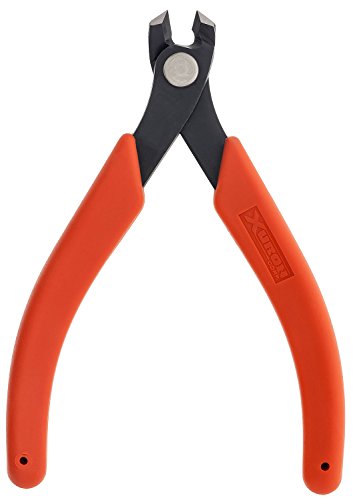
Xuron Vertical Track Cutter 2175M
$21.25Purpose-built for rail, and kept only for rail it stays sharp through an entire layout build.
Best for: Anyone laying flex or sectional track
Check price on AmazonExpert: a third, smaller cutter for fine detail work
Detailing rolling stock, hand-laying turnouts, and working with fine wire eventually calls for a cutter smaller than the standard shears.

Xuron 410 Micro-Shear Flush Cutters
$16.04Smaller jaws reach into tighter spaces than the standard shears, useful for trimming stripped feeder wire ends and fine detail parts without disturbing what is around them.
Best for: Detail work, wiring in tight spaces, hand-laid track
Check price on AmazonWho should not buy this tier: Skip a third cutter if the two you already own handle everything on your bench comfortably; a micro shear only earns its keep in tight spaces the standard shears cannot reach.
How we chose
We did not test these products in person and we never claim to. Picks are researched from manufacturer specification sheets and instruction manuals, published NMRA standards and recommended practices, and the recurring themes in verified owner reviews. Every pick is matched to a real scale, a real minimum radius or a real current draw rather than to a price bracket, and it is placed in the tier where its capability actually belongs. Where a product is wrong for most layouts we say so on the page, and where a figure is a hobby rule of thumb rather than a published standard we say that too.
Frequently asked questions
What is the actual difference between a flush cutter and a regular wire cutter?
A flush cutter grinds one jaw face completely flat, leaving that side of the cut with no angled burr or nub. A regular diagonal cutter angles both jaws, leaving a small pointed stub on both sides of the cut, which matters on rail joints and visible wire ends but rarely matters for household wiring.
Why not just use one good cutter for everything on the workbench?
You can, but it will not stay sharp on rail for long. Cutting steel wire, brass wire or styrene wears the same edge that needs to be flush and square for a clean rail cut, so a shared cutter dulls for rail work much faster than a dedicated one.
Does the size of the cutter matter for HO versus N scale track?
Less than you would expect. The same standard-size flush cutter handles both HO and N scale rail cleanly. A smaller micro shear is more useful for N scale detail parts and fine wire than it is for the rail itself.
Can a dull track cutter damage the rail I am trying to cut?
Yes. A dulled flush cutter starts to crush or pinch the rail end rather than shearing it cleanly, which can leave a slightly bent rail head that causes a rough joint or an unreliable electrical connection at that spot.
Is a $20 cutter really different from a hardware store diagonal cutter?
For rail specifically, yes. A hardware cutter is built for general wire and will leave a burr on a rail cut that needs filing. A purpose-built flush track cutter skips that step, which matters far more if you are cutting dozens of rail joints across a layout.
Do I need both a maxi shear and a micro shear?
Most modelers only need the maxi shear for general wire and kit work. A micro shear is worth adding once you are doing fine detail work or wiring in tight spaces where the standard shears do not fit comfortably.
Where should I store a rail-only cutter so it does not get mixed up with the others?
Keep it physically separate from any general-purpose cutter, ideally in its own labeled pouch, slot or drawer rather than loose in the same tool box. A strip of colored tape wrapped around the handle also makes it easy to identify at a glance when reaching for it in a hurry.
Can I sharpen a dulled flush cutter myself?
Not in any way that reliably restores the original flush edge. These cutters are ground at the factory to a precise flat face, and filing or stoning them at home almost always distorts that geometry further rather than fixing it. Replacing a dulled cutter is cheaper than the bad joints a poorly resharpened one produces.
Researched, not professional advice. This page is compiled from published manufacturer specifications, instruction manuals, published NMRA standards and recommended practices, and owner-review consensus, not hands-on testing. Figures described as a rule of thumb are hobby convention rather than a standard, and they are labelled that way wherever they appear. Always check a radius, a clearance or a grade against your own equipment before you cut wood or lay rail, because manufacturers vary and so does what your specific models will tolerate. Any permanent mains wiring in a layout room is work for a licensed electrician to your local code.