DC power packs
MRC Tech 7 Ampac 780 Train Controller Review
Quick answer
The MRC Tech 7 Ampac 780 Train Controller at $137.09 is a well-specified DC power pack, and the honest limitation is that a DC power pack has no future if you later move to DCC, since the two technologies control the layout in fundamentally different ways.
The MRC Tech 7 Ampac 780 Train Controller is a long-running, well-regarded DC power pack from MRC, offering smoother speed control than a typical rheostat-based pack at this price point. For a DC layout, that is a genuine practical benefit worth paying for.
The tradeoff to understand clearly is what happens if DCC ever enters the picture, since this review would be dishonest if it did not say plainly that a DC power pack is not a stepping stone to DCC.
On this page
What the Tech 7 Ampac 780 actually does
MRC's published specifications describe the MRC Tech 7 Ampac 780 Train Controller as an electronically controlled DC power pack for HO and N scale, built for smoother low-speed control than a basic transformer-and-rheostat pack. That smoothness is a real, noticeable difference according to the consensus of verified owner reviews, particularly for switching operations that need fine speed control.
The limitation to plan around before buying
A DC power pack has no future if you later move to DCC. DCC controls locomotives through digital signals sent over the rails to a decoder inside each locomotive, while a DC power pack simply varies the voltage on the rails directly. The two are not compatible, and there is no upgrade path from one to the other: a DC power pack purchased now becomes spare equipment, not a stepping stone, the day a DCC system is installed. Anyone who suspects DCC might be in their future, even a distant one, should read the DC versus DCC comparison before buying any DC power pack.
Alternatives depending on the layout's future
Budget pick, staying DC: the MRC 1370 All Scale Railpower 1370 Power Pack and MRC Railpower 1300 Power Pack are lower-priced DC power packs worth comparing if smooth speed control is less of a priority than price.
Alternative for a simple starter layout: the Bachmann Power Pack with Speed Controller for N, HO and On3 Scales covers N, HO and On3 scales at a lower price point, a reasonable choice for a small first layout with modest ambitions.
Instead of DC entirely: the NCE Power Cab DCC Starter Set and Digitrax Zephyr Express Starter Set are complete DCC starter systems, and the DC power pack versus DCC starter set comparison walks through the total cost of starting with DCC directly instead of buying DC equipment first.
Who the Tech 7 Ampac 780 actually suits
This power pack suits a buyer firmly committed to running DC for the foreseeable future, who values smooth switching control over the flexibility to run multiple trains independently. It is a poor fit for anyone even mildly curious about running two sound-equipped locomotives at once or controlling function lighting from a throttle, since those are DCC features a DC power pack, however well made, simply cannot deliver at any price.
DC power packs compared side by side
Published specifications for the Tech 7 Ampac 780 against the power packs it is most often cross-shopped with.
| Model | Price |
|---|---|
 MRC Tech 7 Ampac 780 Train Controller MRC Tech 7 Ampac 780 Train Controller | $137.09 |
 MRC 1370 All Scale Railpower 1370 Power Pack MRC 1370 All Scale Railpower 1370 Power Pack | $80.00 |
 MRC Railpower 1300 Power Pack MRC Railpower 1300 Power Pack | $69.00 |
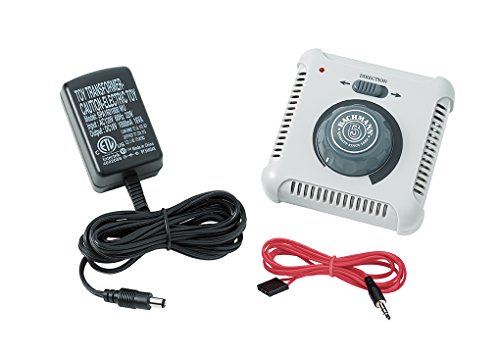 Bachmann Power Pack with Speed Controller for N, HO and On3 Scales Bachmann Power Pack with Speed Controller for N, HO and On3 Scales | $81.70 |
How we chose
We did not test these products in person and we never claim to. Picks are researched from manufacturer specification sheets and instruction manuals, published NMRA standards and recommended practices, and the recurring themes in verified owner reviews. Every pick is matched to a real scale, a real minimum radius or a real current draw rather than to a price bracket, and it is placed in the tier where its capability actually belongs. Where a product is wrong for most layouts we say so on the page, and where a figure is a hobby rule of thumb rather than a published standard we say that too.
Sources
- MRC published product specifications for the Tech 7 Ampac 780
- The consensus of verified owner reviews on MRC DC power pack speed control
Frequently asked questions
Can I convert a DC power pack to DCC later?
No. A DC power pack varies voltage directly on the rails, while DCC sends digital commands to a decoder inside each locomotive. There is no conversion path between the two. Moving to DCC later means buying a separate DCC system entirely and rewiring the track power connection.
What makes the Tech 7 Ampac 780 different from a basic power pack?
MRC's published specifications describe electronic speed control on the MRC Tech 7 Ampac 780 Train Controller, which generally provides smoother low-speed operation than a basic rheostat-controlled pack, according to the consensus of verified owner reviews, particularly noticeable during slow switching moves.
Should I buy DC or start with DCC?
That depends on budget and future plans. DC is cheaper up front and simpler for a single-train layout, while DCC allows multiple trains and sound control at a higher initial cost. The DC versus DCC comparison covers the tradeoff for a first-time buyer directly.
What scales does the Tech 7 Ampac 780 support?
MRC's published specifications describe HO and N scale compatibility for the MRC Tech 7 Ampac 780 Train Controller. Confirm the current listing's stated scale compatibility and maximum current rating against the specific locomotives planned for the layout before buying, since current draw limits differ between scales and between individual locomotive models within the same scale.
Is it worth buying a cheaper DC power pack instead?
If smooth low-speed control is not a priority, a lower-priced pack like the MRC Railpower 1300 Power Pack or Bachmann Power Pack with Speed Controller for N, HO and On3 Scales covers basic running at less cost. The tradeoff is generally less refined speed control at very low throttle settings during switching moves, which matters most on a small layout built around precise yard work.
How much does it cost to switch from DC to DCC later?
It means buying a complete DCC starter system, such as the NCE Power Cab DCC Starter Set or Digitrax Zephyr Express Starter Set, plus a decoder for every locomotive that does not already have one. The DC power pack versus DCC starter set comparison breaks down that total cost.
Researched, not professional advice. This page is compiled from published manufacturer specifications, instruction manuals, published NMRA standards and recommended practices, and owner-review consensus, not hands-on testing. Figures described as a rule of thumb are hobby convention rather than a standard, and they are labelled that way wherever they appear. Always check a radius, a clearance or a grade against your own equipment before you cut wood or lay rail, because manufacturers vary and so does what your specific models will tolerate. Any permanent mains wiring in a layout room is work for a licensed electrician to your local code.