Tools
Best Model Railroad Tools
Quick answer
The best all-in-one starting kit for most first layouts is the Xuron TK2200 Railroaders Tool Kit at $57.50, because it bundles a rail-only cutter, a general wire cutter and two pairs of pliers into one case, instead of five separate purchases made one frustrating gap at a time.
Most of what gets sold as a "model railroad tool kit" is a screwdriver set with a train sticker on the box. The tools that actually change the outcome of a layout are narrower than that: something that cuts rail cleanly without crushing it, something that measures track gauge and coupler height accurately, and eventually something that solders a feeder wire to the underside of the rail without melting the ties next to it. The Xuron TK2200 Railroaders Tool Kit covers the first two for most beginners in one purchase.
This page is the general starting point. If you already know you need a dedicated rail cutter or a soldering iron, the deeper pages on rail nippers and track cutters and soldering irons for model railroads go further than a general kit can.
On this page
- What tools does a beginner actually need to start a layout?
- What's actually in a model railroad tool kit, and is it worth buying as a set?
- Why does it matter if a cutter is only ever used on rail?
- Beginner: the two tools worth buying before your first section of track
- Intermediate: the deluxe set once you are laying track and building kits regularly
- Expert: dedicated tools for a modeler wiring and hand-laying track regularly
- What tool is not worth buying first?
- How do I keep track of which cutter is which once I own more than one?
What tools does a beginner actually need to start a layout?
Four tools cover almost everyone's first six months in the hobby: a flush cutter kept only for rail, a second flush cutter for wire and sprues, a small set of needle-nose pliers, and a digital caliper. That is it. A soldering iron matters the moment you lay flex track and need feeder wires, and a screwdriver set is useful but rarely purpose-built; a household set works fine.
A digital caliper such as the HARDELL Digital Caliper 6 Inch with Large LCD earns its place because so much of this hobby is checking a number against a standard: is this wheelset actually 33 inches by NMRA gauge, is this coupler height within the Kadee range, is this rail code what the package claimed. Eyeballing those checks is how mismatched wheelsets end up derailing on turnout frogs six months into a layout, with no obvious cause.
What's actually in a model railroad tool kit, and is it worth buying as a set?
The individual pieces in a bundled kit are the same Xuron and Excel tools sold separately; the case and the packaging discount are what you are paying for.
A rail-only cutter and a caliper cover most of what a first layout needs; a soldering iron only becomes necessary once you lay flex track.
| Tool | What it does | Price |
|---|---|---|
| Xuron TK2200 Railroaders Tool Kit | Bundled cutter, shears and pliers in one case | $57.50 |
| Excel Deluxe Model Railroad Tool Set | Deluxe multi-tool set with files and picks added | $67.57 |
| Xuron Vertical Track Cutter 2175M | Flush cutter shaped and hardened for rail only | $21.25 |
| Xuron Maxi-Shear Flush Cutter 2175 | General flush cutter for wire, sprues and styrene | $17.63 |
| HARDELL Digital Caliper 6 Inch with Large LCD | Digital caliper for gauge, coupler height and clearance checks | $22.99 |
| YIHUA 926 III 60W Digital Soldering Iron Station Kit with Helping Hands | Temperature-controlled iron for feeder wires | $39.99 |
Prices are the individual catalog listings, not a bundle discount.
Why does it matter if a cutter is only ever used on rail?
Nickel silver rail is soft compared to the steel and tinned copper wire sold for hobby use. A flush cutter that is used on both stays sharp for rail far less time than one reserved for it, because cutting wire dulls the exact edge geometry that gives a clean, square rail end. A dulled cutter does not fail obviously; it just starts to crush the rail end slightly instead of shearing it, which shows up later as a bad electrical joint or a visible kink where two rail sections meet.
The fix costs nothing extra if you already own two cutters: keep the Xuron Vertical Track Cutter 2175M in its own labeled spot and use the Xuron Maxi-Shear Flush Cutter 2175 or the smaller Xuron 410 Micro-Shear Flush Cutters for everything else, from stripping wire insulation to trimming sprues off a structure kit. One dedicated tool, used for one job, outlasts a general-purpose tool asked to do everything.
Beginner: the two tools worth buying before your first section of track
Start with a general cutter and a way to check your own work. Neither purchase depends on which scale or track system you end up choosing.

HARDELL Digital Caliper 6 Inch with Large LCD
$22.99Catches a mismatched wheelset or a coupler set at the wrong height before it causes a derailment you cannot explain later.
Best for: Anyone assembling rolling stock or checking a used locomotive purchase
Check price on Amazon
Xuron Maxi-Shear Flush Cutter 2175
$17.63A general flush cutter for wire, kit parts and sprues that leaves the rail-only cutter clean for the day you lay track.
Best for: Kit assembly and general workbench use
Check price on AmazonIntermediate: the deluxe set once you are laying track and building kits regularly
Once a layout is underway rather than planned, a fuller set saves repeat trips for a tool you did not know you needed.

Excel Deluxe Model Railroad Tool Set
$67.57Adds files, picks and a hobby knife to the core cutter-and-pliers set, which covers most kit and scenery detail work.
Best for: Modelers building structure kits and detailing rolling stock
Check price on AmazonExpert: dedicated tools for a modeler wiring and hand-laying track regularly
At this point tools stop being general-purpose and start being dedicated to one job each, because the volume of repeated work justifies it.
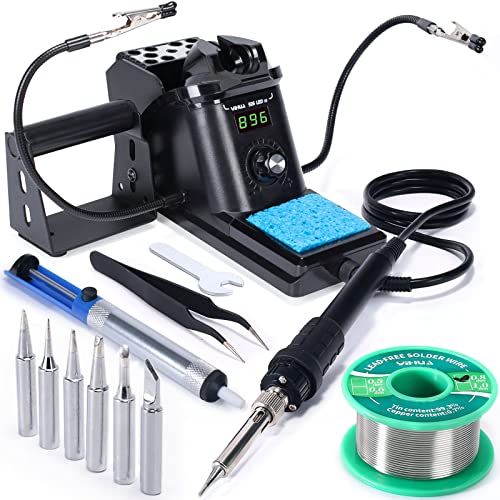
YIHUA 926 III 60W Digital Soldering Iron Station Kit with Helping Hands
$39.99A temperature-controlled iron pays for itself the first time it solders a feeder without softening the tie next to it, see our soldering iron page for why that matters.
Best for: Anyone laying flex track or hand-laying turnouts
Check price on Amazon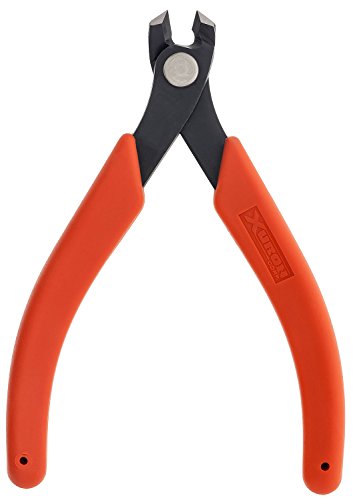
Xuron Vertical Track Cutter 2175M
$21.25A cutter reserved only for rail, kept sharp for years instead of months, because it never touches wire or plastic.
Best for: Anyone laying or modifying track regularly
Check price on AmazonWho should not buy this tier: Skip a dedicated rail cutter and a soldering station if you are running an oval of sectional track that snaps together with no feeders to solder; a household screwdriver and the beginner picks above cover that layout completely.
What tool is not worth buying first?
A full jeweler's screwdriver set, a rotary tool, and a dedicated track gauge beyond what a caliper already does are common first purchases that sit unused. A rotary tool in particular is more useful for scenery and structure work than for track or wiring, and it is easy to buy before you have a project that actually needs it. Buy tools when a specific step in a specific project calls for one, not in anticipation of a hobby you have not started yet.
How do I keep track of which cutter is which once I own more than one?
The most common way this rule falls apart in practice is not disagreement about whether it matters, it is simply forgetting which cutter is which after both have lived in the same drawer for a few months. A cheap fix that actually holds up is color: wrap a strip of colored tape around the handle of the rail-only cutter, a different color on the wire cutter, and keep them in physically separate spots on the pegboard or in the tool box rather than side by side. Some modelers go a step further and store the rail cutter in its own small pouch or tube so it is never picked up by accident when reaching for "a cutter" in a hurry.
The same logic extends to any tool that benefits from staying dedicated to one job: a screwdriver used only on delicate structure kit screws stays less chewed up than one also used on drywall anchors, and a small file kept only for smoothing rail ends after a cut stays finer than one also used to deburr styrene. None of this requires buying more tools than the lists above; it requires being deliberate about which existing tool touches which material.
How we chose
We did not test these products in person and we never claim to. Picks are researched from manufacturer specification sheets and instruction manuals, published NMRA standards and recommended practices, and the recurring themes in verified owner reviews. Every pick is matched to a real scale, a real minimum radius or a real current draw rather than to a price bracket, and it is placed in the tier where its capability actually belongs. Where a product is wrong for most layouts we say so on the page, and where a figure is a hobby rule of thumb rather than a published standard we say that too.
Frequently asked questions
Do I need a soldering iron before I lay my first piece of track?
Not for sectional track with rail joiners, which usually runs on the power from a single pair of track terminals. A soldering iron becomes necessary once you lay flex track long enough that voltage drop across the rail joints becomes a problem, which is where feeder wires and a temperature-controlled iron come in.
Can I use the same flush cutter for rail and for wire?
You can, but it will not cut cleanly for long. Cutting steel or copper wire dulls the exact edge that gives a rail-only cutter its clean, square cut. Keeping one cutter for rail and a second cheaper one for everything else costs little and both stay sharp far longer.
What does a digital caliper actually get used for on a model railroad?
Checking wheel gauge against the NMRA standard, checking coupler height against the Kadee gauge range, measuring clearance between two parallel tracks, and confirming a rail code before you buy more of it. It is a diagnostic tool as much as a measuring one.
Is a bundled tool kit cheaper than buying the pieces separately?
Usually close to the same price or slightly less, and the real value is not assembling a shopping list from scratch. If you already own a caliper or a cutter, buying only what is missing is usually the better move.
What is the difference between the Xuron cutter and a hardware store wire cutter?
A hobby flush cutter is ground to leave one face completely flat, so the cut end of a rail or a wire sits flush against the surface next to it instead of leaving a pointed nub. A general hardware cutter leaves a small cone-shaped burr on both sides, which matters for a rail joint but not for most household wiring.
How often does a rail-only cutter need replacing?
Kept only for rail, a quality flush cutter can last years of regular track work before it noticeably dulls. Used on wire as well, the same cutter can lose its edge within a single project, which is the whole argument for keeping a second cheap cutter for everything else.
Researched, not professional advice. This page is compiled from published manufacturer specifications, instruction manuals, published NMRA standards and recommended practices, and owner-review consensus, not hands-on testing. Figures described as a rule of thumb are hobby convention rather than a standard, and they are labelled that way wherever they appear. Always check a radius, a clearance or a grade against your own equipment before you cut wood or lay rail, because manufacturers vary and so does what your specific models will tolerate. Any permanent mains wiring in a layout room is work for a licensed electrician to your local code.