HO diesel locomotives
Walthers Mainline EMD GP9 with ESU Sound Review
Quick answer
The Walthers Mainline EMD GP9 Phase II with ESU Sound and DCC HO Scale at $184.99 pairs a factory ESU sound decoder with Walthers' Mainline tier body shell, which trades some of the paint and detail sharpness of Walthers' pricier Proto line for a lower price with sound already installed.
The Walthers Mainline EMD GP9 Phase II with ESU Sound and DCC HO Scale sits in Walthers' Mainline product tier, a deliberate step below the company's more expensive Proto line, and understanding that tiering is the key to reviewing this locomotive fairly. Walthers itself documents Mainline as its value tier, aimed at buyers who want a runnable, factory-sound-equipped locomotive without paying for the Proto line's finer detail work.
Judged as what it actually is, a value-tier sound locomotive, it is a strong option. Judged against Walthers' own flagship detail line, it is not trying to compete there.
On this page
What comes in the box
Walthers' published specifications describe the Walthers Mainline EMD GP9 Phase II with ESU Sound and DCC HO Scale as an EMD GP9 Phase II model with a factory-installed ESU sound decoder and DCC capability, decorated for a specific paint scheme. That is a meaningfully different scope from the DC-only Walthers Trainline EMD GP9M Standard DC Burlington Northern HO Scale, which shares a similar prototype but skips sound and DCC entirely at a lower price point.
The compromise of the Mainline tier
Walthers positions Mainline explicitly as its value tier, below the more detailed Proto and Genesis product lines. That compromise is worth naming directly: paint register, separately applied detail parts and overall fit and finish are generally a step below Walthers' pricier lines, in exchange for a lower price and, on this model, a factory sound decoder included. For a buyer prioritizing sound and price over the sharpest possible detail, that is a reasonable trade. For a buyer chasing contest-level detail, it is the wrong tier to shop in regardless of price.
Alternatives depending on priorities
Budget pick, no sound: the Walthers Trainline EMD GP9M Standard DC Burlington Northern HO Scale drops sound and DCC for a lower price, a reasonable choice for a DC layout or a buyer planning to add their own decoder.
Alternative brand, factory sound: the Athearn HO GP40-2L with DCC and Sound Guilford Maine Central is a different prototype but a comparable factory-sound diesel from a different manufacturer, worth cross-shopping directly, and the Athearn versus Walthers Mainline comparison covers the detail and price tradeoff in depth.
Alternative, different road name: the Bachmann EMD GP40 DCC Sound Equipped Locomotive Union Pacific HO Scale is another factory DCC sound diesel worth comparing on price and included features.
Who the Mainline GP9 actually suits
This locomotive suits a buyer building an operational layout on a real budget who wants factory sound without paying Proto-line prices, and who is not chasing contest-grade detail. It is a poor match for a modeler entering a judged detail contest or building a showcase display piece, where the Proto or Genesis lines earn their higher price with sharper paint separation and finer separately applied parts.
HO diesel locomotives compared side by side
Published specifications for the GP9 against the diesels most commonly cross-shopped with it.
| Model | Price | Scale | Proportion | Wheel arrangement | DCC | Onboard sound |
|---|---|---|---|---|---|---|
 Walthers Mainline EMD GP9 Phase II with ESU Sound and DCC HO Scale Walthers Mainline EMD GP9 Phase II with ESU Sound and DCC HO Scale | $184.99 | HO | 1:87 | B-B | Yes | Yes |
 Walthers Trainline EMD GP9M Standard DC Burlington Northern HO Scale Walthers Trainline EMD GP9M Standard DC Burlington Northern HO Scale | $72.24 | HO | 1:87 | B-B | - | - |
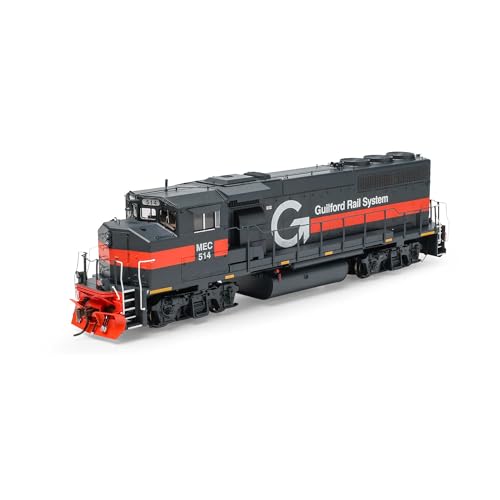 Athearn HO GP40-2L with DCC and Sound Guilford Maine Central Athearn HO GP40-2L with DCC and Sound Guilford Maine Central | $298.77 | HO | 1:87 | B-B | Yes | Yes |
 Bachmann EMD GP40 DCC Sound Equipped Locomotive Union Pacific HO Scale Bachmann EMD GP40 DCC Sound Equipped Locomotive Union Pacific HO Scale | $227.82 | HO | 1:87 | B-B | Yes | Yes |
How we chose
We did not test these products in person and we never claim to. Picks are researched from manufacturer specification sheets and instruction manuals, published NMRA standards and recommended practices, and the recurring themes in verified owner reviews. Every pick is matched to a real scale, a real minimum radius or a real current draw rather than to a price bracket, and it is placed in the tier where its capability actually belongs. Where a product is wrong for most layouts we say so on the page, and where a figure is a hobby rule of thumb rather than a published standard we say that too.
Sources
- Walthers Mainline published product specifications for the GP9 with ESU sound
- Walthers published documentation describing its Mainline, Proto and Genesis product tiers
- The consensus of verified owner reviews on Walthers Mainline detail and finish
Frequently asked questions
Does the Walthers Mainline GP9 come with sound already installed?
Yes, the manufacturer's published specifications describe the Walthers Mainline EMD GP9 Phase II with ESU Sound and DCC HO Scale as shipping with a factory-installed ESU sound decoder, unlike the DC-only Walthers Trainline EMD GP9M Standard DC Burlington Northern HO Scale, which shares a similar prototype but has no sound or DCC decoder installed and would need one added separately before it could run on a DCC layout with sound at all.
What is the difference between Walthers Mainline and Walthers Proto?
Mainline is Walthers' documented value tier, generally trading some paint register and separately applied detail parts for a lower price. Proto is a step up in detail and finish at a higher price. The Athearn versus Walthers Mainline comparison covers how the tiers compare against a competing brand.
What minimum radius does the GP9 need?
A GP9 has a shorter wheelbase than a six-axle diesel like an SD40, which generally means a tighter minimum radius, but the exact figure depends on the specific model's truck spacing and body overhang. Check the manufacturer's stated minimum and confirm it with the minimum radius calculator.
Is a Mainline tier locomotive worth it compared to Proto?
That depends on priorities. A buyer who wants a runnable, factory-sound-equipped locomotive at a lower price is well served by Mainline. A buyer chasing the sharpest available paint and detail work should compare Walthers' Proto line directly, since Mainline was never positioned to compete on that specific measure.
Does the ESU decoder in this locomotive support DCC sound features fully?
The manufacturer's published specifications describe a full ESU sound decoder installed, which generally supports standard DCC sound features like adjustable volume and function-mapped sounds. Confirm the specific decoder's feature set against ESU's own decoder documentation for exact programming details.
How does this GP9 compare to an Athearn sound locomotive?
Both include factory DCC sound, but from different manufacturers with different detail tiers and prototypes. The Athearn HO GP40-2L with DCC and Sound Guilford Maine Central models a different locomotive entirely, so the comparison is really about brand detail level and price rather than a direct prototype match.
Researched, not professional advice. This page is compiled from published manufacturer specifications, instruction manuals, published NMRA standards and recommended practices, and owner-review consensus, not hands-on testing. Figures described as a rule of thumb are hobby convention rather than a standard, and they are labelled that way wherever they appear. Always check a radius, a clearance or a grade against your own equipment before you cut wood or lay rail, because manufacturers vary and so does what your specific models will tolerate. Any permanent mains wiring in a layout room is work for a licensed electrician to your local code.