HO scale
HO Beginner Layout on a 4 by 8 Sheet
Quick answer
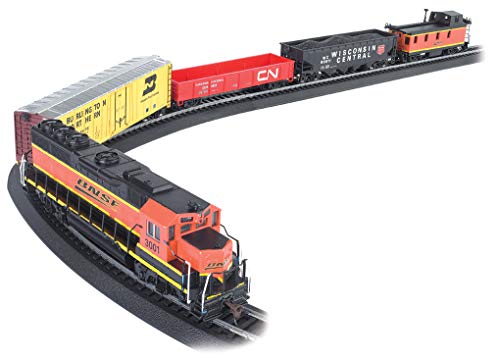
A complete first HO layout on a 4 by 8 foot sheet costs about $619 including a ready to run train set, enough extra track for a passing siding, the three tools that actually matter and basic ballast and scenery. It runs on the 18 inch radius the set supplies.
This is the layout almost everybody should build first, and the reason is not that it is cheap. It is that it is finishable. A 4 by 8 sheet with an oval, a siding and some scenery can be running in a weekend and looking respectable in a month, and finishing something is what teaches you which parts of the hobby you actually enjoy.
The trap at this level is buying a bigger layout than you will finish. A larger plan on the same budget means bare plywood for years, and bare plywood is where most first layouts quietly stop.
One honest limitation up front: the 18 inch radius curves in an E-Z Track set will not run 85 foot passenger cars or large steam locomotives properly. Short freight cars and four axle diesels are what this layout is for. Check anything you are tempted by against the minimum radius calculator before buying it.
The complete build: $619
$619A 4 by 8 foot sheet of plywood and something to stand it on, which is not in this list. Allow about two feet of aisle on three sides, so the layout really wants an 8 by 12 foot area. See the <a href="/calculators/benchwork-lumber-calculator">benchwork lumber calculator</a> for the framing.
Train set and track
The set supplies the oval and the controller. The expander pack turns it into a layout with a siding, which is what makes it interesting to operate rather than just watch.


The three tools that matter
Not a workshop. These three solve the three problems a first layout actually has.
| Item | Qty | Each | Line |
|---|---|---|---|
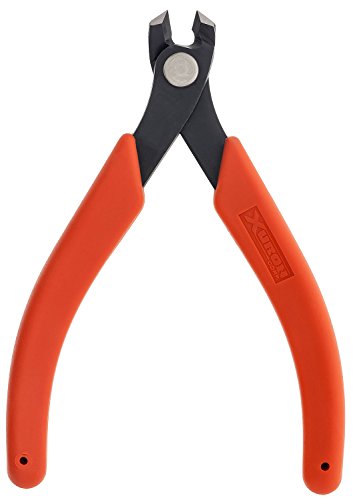 Xuron Vertical Track Cutter 2175M Cuts rail cleanly with almost no distortion, which is what stops a kink at every joint Xuron Vertical Track Cutter 2175M Cuts rail cleanly with almost no distortion, which is what stops a kink at every joint | 1 | $21.25 | $21.25 |
 Kadee 206 Insulated Coupler Height Gauge HO Finds the coupler height mismatch behind most mystery uncouplings Kadee 206 Insulated Coupler Height Gauge HO Finds the coupler height mismatch behind most mystery uncouplings | 1 | $13.35 | $13.35 |
 HARDELL Digital Caliper 6 Inch with Large LCD Reads inches and millimetres, which is what scale modelling constantly needs HARDELL Digital Caliper 6 Inch with Large LCD Reads inches and millimetres, which is what scale modelling constantly needs | 1 | $22.99 | $22.99 |
| The three tools that matter subtotal | $57.59 | ||
The first upgrade to the rolling stock
Metal wheels are the cheapest change that improves how the layout runs, and they shed far less debris onto the railhead than plastic.
| Item | Qty | Each | Line |
|---|---|---|---|
 Walthers Proto HO Scale 33 inch Wheelsets Metal Wheels and Metal Axles 12-Pack Re-wheels six freight cars on metal wheels and metal axles Walthers Proto HO Scale 33 inch Wheelsets Metal Wheels and Metal Axles 12-Pack Re-wheels six freight cars on metal wheels and metal axles | 2 | $19.99 | $39.98 |
 Kadee HO Scale Number 5 Coupler 10 Pair Standardises the roster on one reliable knuckle coupler Kadee HO Scale Number 5 Coupler 10 Pair Standardises the roster on one reliable knuckle coupler | 1 | $32.61 | $32.61 |
| The first upgrade to the rolling stock subtotal | $72.59 | ||
Basic scenery
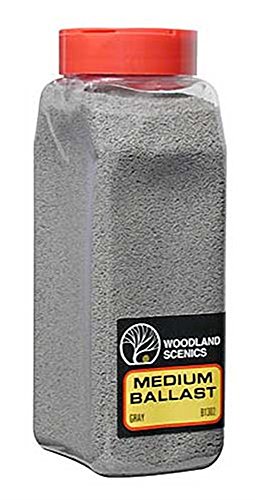
Enough to make the layout look like somewhere rather than like track on a board. Ballast first, because it changes the look more than anything else per dollar.



Reading
The cheapest mistake avoidance available. Most first layouts fail on geometry, not on budget.
| Item | Qty | Each | Line |
|---|---|---|---|
 Build Your First Layout Model Railroader Essential Takes one layout from bare benchwork to running trains Build Your First Layout Model Railroader Essential Takes one layout from bare benchwork to running trains | 1 | $21.99 | $21.99 |
 Atlas Track Planning Template HO Scale Draws a plan to real track geometry rather than to wishful curves Atlas Track Planning Template HO Scale Draws a plan to real track geometry rather than to wishful curves | 1 | $9.25 | $9.25 |
| Reading subtotal | $31.24 | ||
Total for this build
Equipment only, at the listed prices when this page was compiled. It does not include the plywood, the lumber for the frame, or paint for the backdrop.
What this layout will and will not run
The 18 inch radius is the constraint. This is what it means in practice.
An 18 inch radius runs 40 and 50 foot freight cars and four axle diesels comfortably, and will not properly run 85 foot passenger cars, which want about 35 inches.
| Equipment | Model length | Radius wanted | On this layout |
|---|---|---|---|
| 40 foot boxcar | 5.51 in | 16.5 in | Runs well |
| 50 foot boxcar | 6.89 in | 20.7 in | Runs, slight overhang |
| Four axle diesel (GP38) | 8.27 in | 24.8 in | Runs, visible overhang |
| Six axle diesel (SD40-2) | 9.37 in | 28.1 in | Too sharp, avoid |
| 85 foot passenger car | 11.71 in | 35.1 in | Will not run properly |
Radius wanted is three times the model length, which is hobby convention rather than a published standard. A manufacturer stated minimum for a specific model always takes priority.
Why a siding matters more than more track
The expander pack in this list exists to add one passing siding, and that single piece of trackwork does more for the layout than doubling the length of the main line would.
An oval lets you watch a train go round. An oval with a siding lets you run two trains and have one wait for the other, or park a cut of cars and shunt them, which turns watching into doing. That is the difference between a layout that holds attention for a month and one that holds it for years.
The rule that follows: on a small layout, spend on turnouts and on scenery, not on more plain track. Plain track is the cheapest thing per foot and the least interesting thing per square foot.
What you can skip
Three things people buy at this stage and should not.
- A DCC system, for now. On a layout with one operator and one train, DCC buys you very little. The set controller is fine. If you already know you want sound and multiple trains, skip ahead to the intermediate build rather than half-converting this one.
- An airbrush. Nothing on this layout needs one. It is the right purchase later, when you are weathering a fleet rather than building your first oval.
- More locomotives. One locomotive that runs well teaches you more than three that sit in boxes, and the money does far more good spent on track and scenery at this stage.
What to upgrade first
Broader curves, before anything else. The 18 inch radius that came in the box is the single biggest limit on this layout: it decides what equipment you can ever run. Moving to 22 inch radius sectional track, or to flex track laid at whatever the sheet allows, costs relatively little and permanently removes that ceiling.
After that, metal wheels on everything, then a proper soldering iron so you can put feeders on the rail instead of trusting rail joiners for continuity.
Frequently asked questions
How much does a first HO layout cost?
About $619 for everything in this list, which covers a ready to run set, extra track for a siding, three essential tools, metal wheels and basic scenery. The plywood and framing lumber are on top of that, and so is anything you already own. A bare train set alone is considerably less.
Is a 4 by 8 sheet big enough for an HO layout?
For 40 and 50 foot freight cars and four axle diesels, yes. The 22 inch maximum radius a 4 by 8 allows runs those comfortably. It is too sharp for 85 foot passenger cars and large steam. The bigger practical issue is that the room needs roughly 8 by 12 feet once you allow aisles on three sides.
Should I start with DCC or DC?
DC is fine for a first layout with one operator and one train, and the set controller does the job. DCC earns its cost when you want several locomotives running independently on the same track, or sound. Converting later is straightforward, so starting on DC is not a dead end, it is a deferred decision.
Do I need to ballast the track?
Not for the trains to run, and yes if you want it to look like a railroad. Ballast is the single biggest visual improvement per dollar on a first layout. Keep the adhesive out of the turnout throwbars and point rails: glue in the mechanism usually costs more time to clean than the turnout is worth.
What is the most common mistake on a first layout?
Filling the space with track. A small layout with too much track has nowhere for scenery, nothing that looks like a real place, and sidings too short to hold a useful train. One main line, one passing siding long enough for your longest train, and two or three industries gives far more operation and looks better.
Can I extend this layout later?
Yes, and E-Z Track makes it easy because the sections clip together and survive being taken up. The more common path is that the first layout teaches you what you want, and the second one is built to a plan with flex track and broader curves. Treat this as the layout that answers that question.
Researched, not professional advice. This page is compiled from published manufacturer specifications, instruction manuals, published NMRA standards and recommended practices, and owner-review consensus, not hands-on testing. Figures described as a rule of thumb are hobby convention rather than a standard, and they are labelled that way wherever they appear. Always check a radius, a clearance or a grade against your own equipment before you cut wood or lay rail, because manufacturers vary and so does what your specific models will tolerate. Any permanent mains wiring in a layout room is work for a licensed electrician to your local code.