HO scale
HO Expert Layout with Sound, Turntable and Power Districts
Quick answer
A large HO layout with an ESU command station, a separate booster for a second power district, sound locomotives, a motorised DCC turntable and electrofrog turnouts comes to about $4,205. Most people do not need this and should build the intermediate layout instead.
This is the performance ceiling, and the honest thing to say first is who should not build it: anybody who has not already finished a layout. Every item here solves a problem you only have once the previous layout has taught you that you have it.
What makes it different from the intermediate build is not that the parts are more expensive. It is that the layout is large enough to need power districts, so a derailment in the yard does not stop the train on the main line, and large enough to justify an engine terminal with a working turntable.
It also runs electrofrog turnouts throughout, which eliminates stalling on the frog and demands that the wiring be done correctly or it shorts. That trade is the essence of this tier: more capability in exchange for more that can be got wrong.
The complete build: $4,205
$4,205Substantial benchwork, a room that can hold it, and a finished intermediate layout behind you. Size the power with the <a href="/calculators/dcc-power-budget-calculator">DCC power budget calculator</a> and the bus with the <a href="/calculators/bus-wire-gauge-calculator">bus wire gauge calculator</a>.
Command station, booster and wiring
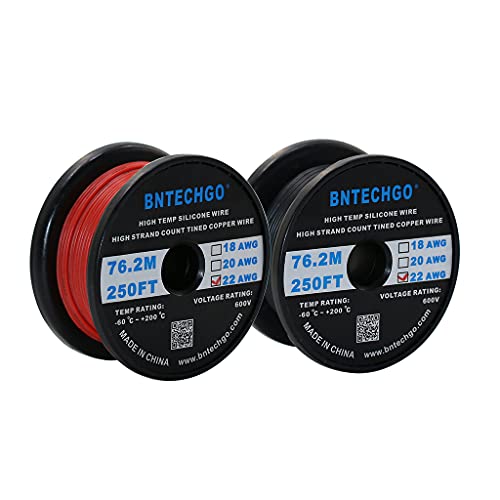
Two power districts, so a short in one area stops that area and not the railroad. This is the reason for the separate booster, not the raw current.



Trackwork
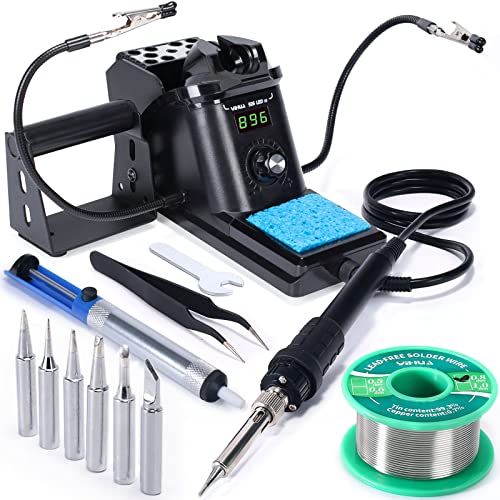
Electrofrog turnouts power the frog rather than leaving it dead, which stops short wheelbase locomotives stalling. They must be wired correctly or they short.



Engine terminal
A turntable is the most watched thing on a layout. Indexing, the ability to stop exactly on a track every time, is most of what the money buys.
| Item | Qty | Each | Line |
|---|---|---|---|
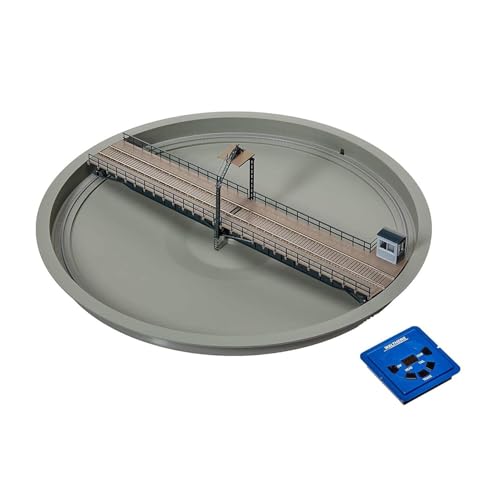 Walthers Cornerstone Motorized 110 foot Turntable with DCC HO Scale Motorised with DCC control and indexing built in, so it aligns rather than needing a nudge Walthers Cornerstone Motorized 110 foot Turntable with DCC HO Scale Motorised with DCC control and indexing built in, so it aligns rather than needing a nudge | 1 | $334.00 | $334.00 |
| Engine terminal subtotal | $334.00 | ||
Motive power and sound
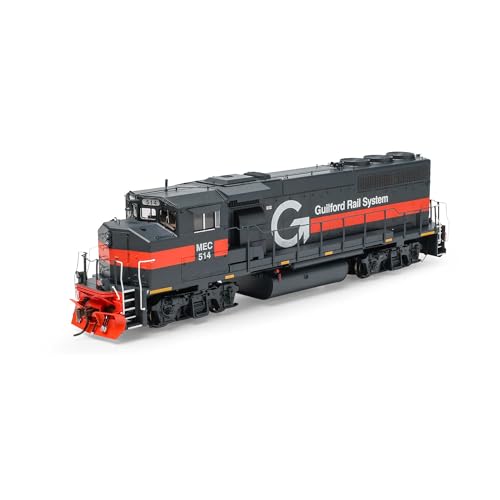
Sound on the locomotives that earn it. A LokSound arrives needing a sound file loaded for your specific prototype, which needs the programmer.


Rolling stock
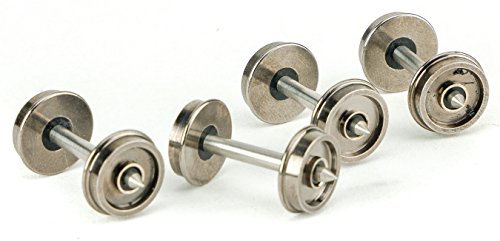
A roster long enough to make up real trains, all on metal wheels and one coupler standard.



Scenery, structures and backdrop
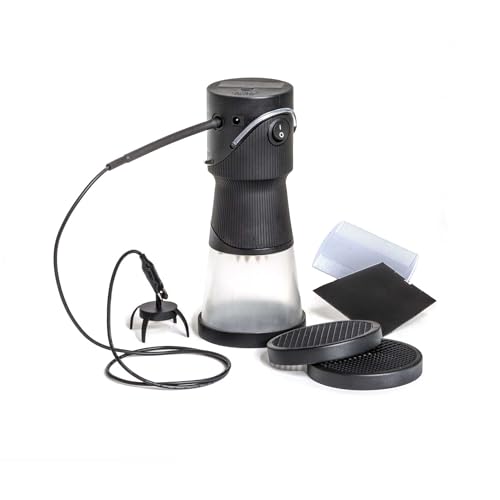
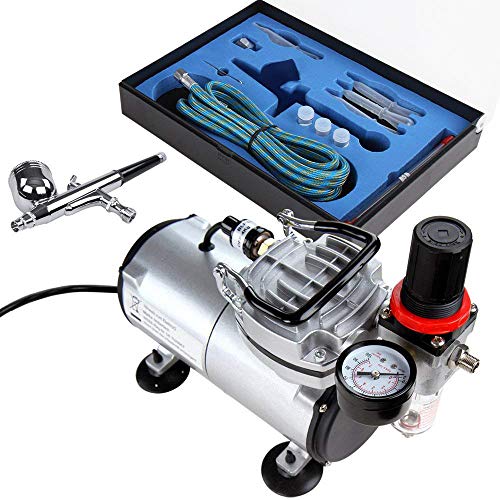
At this scale the backdrop does more for apparent depth than any amount of additional foreground detail.







Total for this build
Equipment only, at the listed prices when this page was compiled. Benchwork for a layout this size, the room itself, and any electrical work are on top and the last of those is a job for a licensed electrician.
Why power districts rather than one big booster
The reason to split a layout is not current, it is containment. On a single district layout, a derailment that shorts the rails anywhere stops every train everywhere, and the operator at the far end has no idea why. With districts, the short kills one district and the rest of the railroad keeps running.
Districts also shorten each bus run, which reduces the wire gauge needed and keeps the DCC waveform cleaner at the far end of the layout. That is a real secondary benefit and it is why districts are worth creating even where one booster could supply the total current.
The related case is the reversing section. Any loop, wye or turntable that returns a train to the main line facing the other way reverses the rail polarity and will short every single time without auto-reversing. The booster in this list is auto-reversing for exactly that reason, and a layout with a turntable needs it.
What this tier actually buys you
Set against the intermediate build, so the step is visible rather than assumed.
The expert build adds power districts, a working engine terminal, powered frogs and sound throughout, and roughly triples the cost of the intermediate layout.
| Element | Intermediate | Expert | What the difference buys |
|---|---|---|---|
| Control | Single system, one district | Command station plus booster, two districts | A short in one area does not stop the railroad |
| Turnouts | Number 6 and snap switches, dead frog | Electrofrog number 6 and number 8 | No stalling on the frog, at the cost of correct wiring |
| Engine terminal | None | Motorised DCC turntable with indexing | Somewhere to turn and service steam power |
| Sound | One locomotive | Three, plus spare decoders | Atmosphere, and a real share of the budget |
| Scenery | Ballast, shell, trees, backdrop | Adds static grass and an airbrush | Grass that stands up and models painted evenly |
What you can skip
Sound on every locomotive. Four sound locomotives idling in one room is not four times better than one, it is noise, and it is a large fraction of this budget. The LokPilot decoders in this list exist for exactly that reason: ESU motor control without the sound, at about a third of the price.
The turntable, if the plan has nowhere for it. It is the most watched thing on a layout and it is also a substantial piece of trackwork that needs a roundhouse or at least a fan of tracks to justify it. Bolting one onto a plan that does not want it is the most visible way to waste money at this tier.
A second command station. The booster gives you a second power district. It does not need its own brain.
What to upgrade first
Signalling or a computer interface, not more locomotives. At this point the roster is not the limit, the operating scheme is. A computer interface opens up JMRI for decoder programming and for running a dispatcher's panel, and that changes how the layout is used far more than another locomotive would.
After that, more staging. Almost every large layout is short of somewhere to put trains that are not currently running.
Frequently asked questions
Who should actually build this layout?
Somebody who has already finished a layout and knows which parts of the hobby they enjoy. Every item here solves a problem you only have once a previous layout has revealed it. Building this first is the most reliable way to spend a great deal of money on a railroad that never gets finished.
Do I really need two power districts?
On a layout this size with more than one operator, yes, and the reason is containment rather than current. A short anywhere on a single district stops every train everywhere. With districts it stops one area. The shorter bus runs also reduce the wire gauge needed and keep the DCC signal cleaner.
Are electrofrog turnouts worth the extra wiring?
If you run short wheelbase steam or small switchers, yes: a powered frog eliminates the stall that a dead frog causes. If your roster is modern diesels with all wheel pickup and flywheels, the benefit is much smaller. The cost is that incorrect wiring shorts the district, so it is a real trade rather than a free upgrade.
Why LokPilot decoders as well as LokSound?
Because sound on every locomotive is not an improvement. A LokPilot gives the same excellent ESU motor control and slow speed running at roughly a third of the price of a LokSound. Put sound on the locomotives that earn it and motor control on the rest, and the budget goes considerably further.
Does a LokSound decoder work straight out of the packet?
It runs, but it arrives without a sound file matched to your specific prototype, and loading one needs a programmer. That is the honest catch with ESU sound and it is why factory fitted locomotives, where the file is already loaded, are often better value than buying the decoder separately.
What is the most over-bought item at this tier?
Sound decoders, followed by a turntable on a plan with nowhere to put it. Four sound locomotives idling in one room is noise rather than atmosphere, and a turntable without a roundhouse or a fan of tracks is a large piece of trackwork that does not earn its space.
Researched, not professional advice. This page is compiled from published manufacturer specifications, instruction manuals, published NMRA standards and recommended practices, and owner-review consensus, not hands-on testing. Figures described as a rule of thumb are hobby convention rather than a standard, and they are labelled that way wherever they appear. Always check a radius, a clearance or a grade against your own equipment before you cut wood or lay rail, because manufacturers vary and so does what your specific models will tolerate. Any permanent mains wiring in a layout room is work for a licensed electrician to your local code.